


Mission
The Metro West Football Academy exists to provide high-level, developmentally focused, off-season programming to any and all players throughout the youth soccer landscape.
Core Beliefs
Education First - Professional session design and delivery.
Accessible Scheduling - Mindfully designed programs to work around busy lives.
Developmental Focus - High standards for execution and process awareness. Iteration, exploration, and repetitions, are the focus.
Wolves Culture - Pack mentality, training with us means you are one who strives, who dreams, and we work together to lift one another to that ideal.
two primary programs
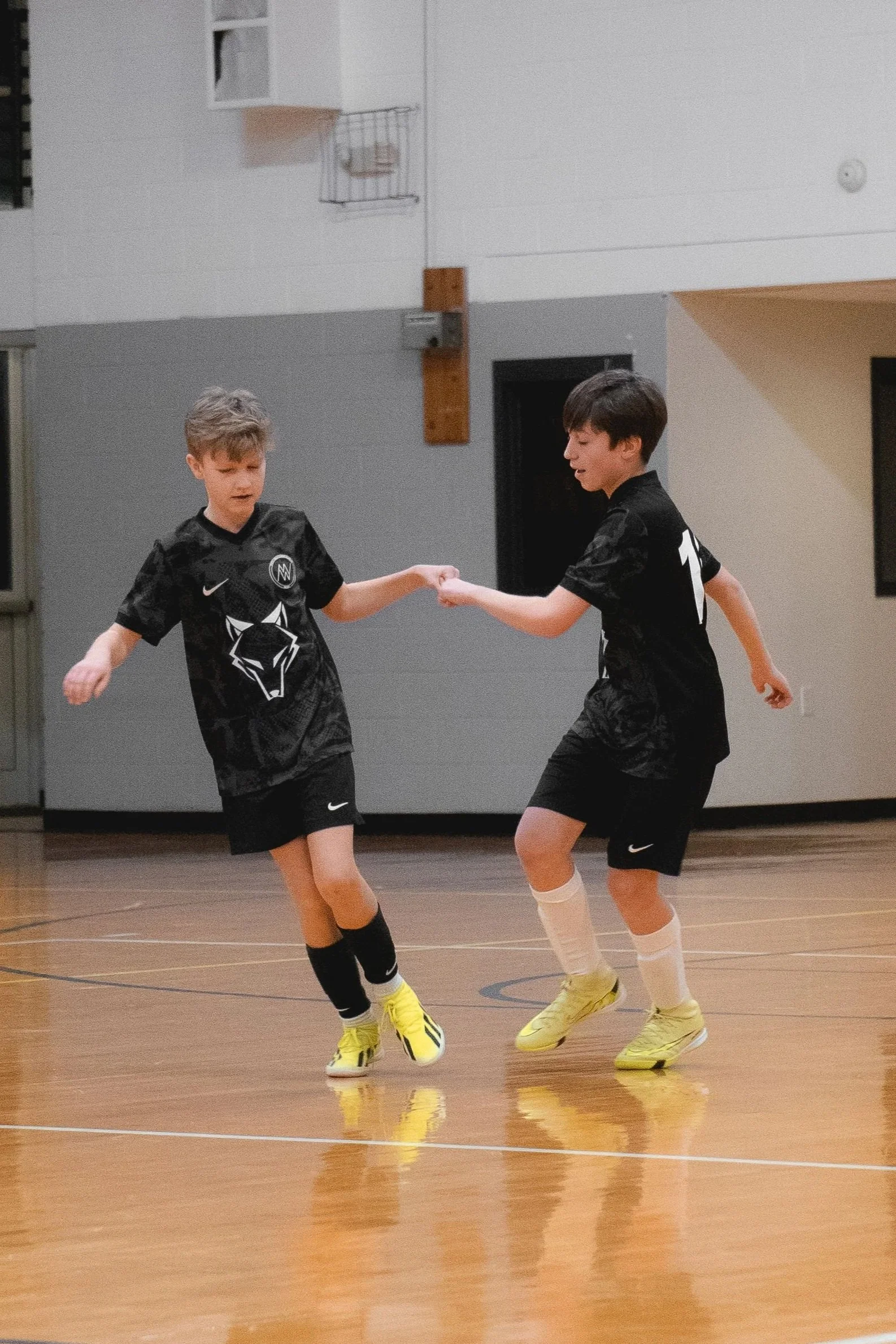
Wolves Futsal
A competitive winter futsal club that fields teams in the Mass youth Futsal league. Our home facility is the Charles River School in Dover MA.
Summer Training Academy
A summer long weekly group training program that takes place in the evenings, providing sessions designed around individual improvement. Our home facility is the Tenacre Country Day School in Wellesley.
supplimentary programs
Wolves Futsal Clinics
Weekend Futsal Clinics run periodically throughout the year with different focuses and purposes.
Athletic Development Clinics
Youth athlete physical development, performance enhancement, and injury resistance training programs run periodically throughout the year utilizing partnerships with various health and fitness professionals and spaces.
summer academy training
Weekly, evening, group training for self-motivate, passionate players who desire improvement. get the repetitions and feedback needed to improve.
Our Methodology…
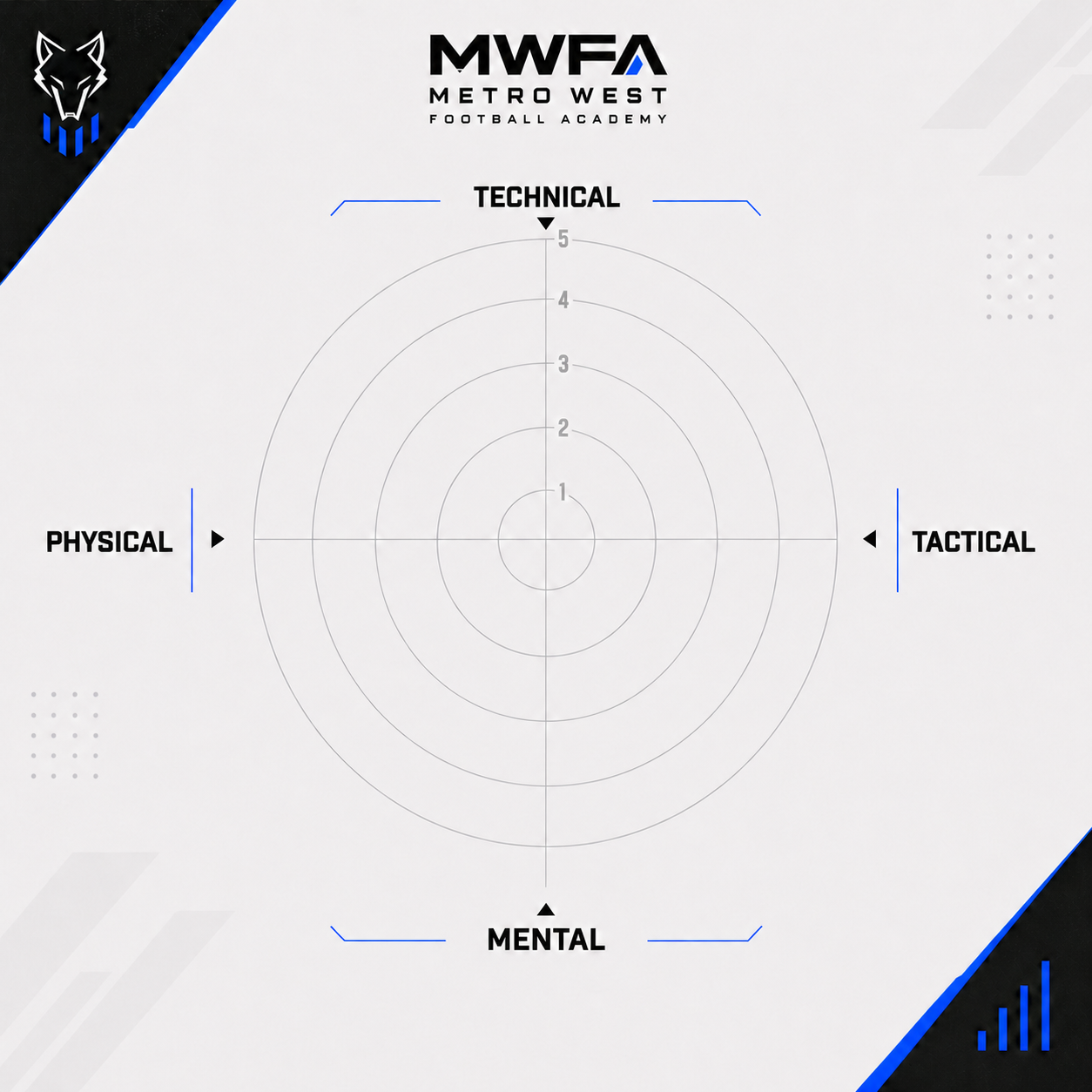
Core Player Attributes Model
The Core Player Attributes Model is the basis for how we build our athletes.
A soccer player is the combination of their Technical, Tactical, Physical, and Mental, skills and abilities.
Technical - 5 Foundational Skills
Receiving, Dribbling, Passing, Ball Striking, and Tackling. A player must master these 5 skills in their fundamentals and then build their own self-expression of these skills as they grow and develop.
Tactical - First Principles
Tactical ability has the greatest variance. Soccer can be played in so many ways, with no one way being the “correct” way. We focus on first principles for various age groups to help build a foundation they can apply to any team or coach. These include, scanning, communication, overloads, recycling, switching, breaking lines, build up, passing combinations, and more.
Physical - Athletic Foundation
A large topic, however, we focus on soccer specific athletic ability rather than general health and fitness in our training. Ground force reactions, single leg strength/power, dynamic core stability, torso rotation, acceleration and deceleration.
Mental - Controllables
Soccer requires dynamic problem-solving, real-time decision making, constant failure, understanding of a system, creative flair, extreme physical fatigue over time, coachability, leadership, and teamwork. Players need to be able to self-regulate, take in information, think on their feet, lead themselves and take feedback, all while in a flow state on the field. These are skills we aim to help players learn and understand during training.
Because our sessions are specifically group training sessions aimed at individual improvement, they are unlike any other sessions you would see at traditional summer camps or team practices.
Session Planning and Delivery
The Integration to Isolation Sliding Scale is the core principle in our session design that takes the goal of the session, the learning outcome, and places it somewhere along this scale. The session is then designed to move across this scale starting from isolation and working towards integration.
For example, if the learning outcome is to improve ball striking technique when finishing from outside the box, then we would start with the most isolated way to work towards this with players taking uncontested shots from outside the box with no external stimulus. As the session progresses, we will add layers of complexity in movement, timing, actions before/after, time pressures, or situational pressure, until eventually we are doing something resembling live play with a finishing outside the box focus.
This allows players to explore ideas and techniques on their own and build that skill into gameplay one step at a time, one layer at a time, so that they develop true mastery, understanding, and confidence.
Learning Outcomes
Situational Management
Time Pressure
Opposition Pressure
Game Situations
Individual or Team Based Problem Solving
The Isolation to Integration Sliding Scale